100 Answers in 100 Days

More questions answered on this blog:

Sharing answers to the various questions of faith I have faced, and which others have been challenged with also.

Friday, October 14, 2011

Why I Take Genesis Literally

A friend of mine, both a theist and an evolutionist, believes that the two world views are not in conflict. In his mind, he simply can’t understand why Christians such as myself are so opposed to Evolution since it poses no threat, as far as he’s concerned, to the existence of God. I answered him, “It’s possible that a god could have set the wheels in motion for evolution, but it certainly wouldn’t be the Christian God who gave us the book of Genesis.” We then began to discuss whether Genesis should be taken literally or not, and so I thought I’d share just a few comments as to why I think it should be.


A First Man
The first point to make, which I think eliminates a lot of other questions right up front, is whether there was a literal first man, Adam. In my mind, I think the Bible is very clear that there was. In Genesis 5 we have a genealogy beginning with Adam. It lists the descendants of Noah. I suppose we would then have to ask ourselves whether the rest of the people in that Genealogy really existed as well, but again I think the Bible is fairly clear that they did, especially when we look at something like Hebrews 11, whose very purpose is to give us real exemplars of faith throughout history, and includes a few of the names in this genealogy. Adam is also listed first in the genealogy of 1 Chronicles; a genealogy that most definitely consists of real people. At what point in the genealogy would the first real person be mentioned if they weren’t all real? And finally we have the genealogy in Luke’s gospel as well, whose purpose is to trace the lineage of Jesus Christ right back to the first man. In this way, the Biblical authors themselves certainly appear to consider Adam an actual person.

Literal Days
The next question is whether the six days of Creation were 24 hours or not. There are a few reasons why I think they were. Firstly, the Bible says:

And God said, Let there be light, and there was light. ... God called the light Day, and the darkness he called Night. And there was evening and there was morning, the first day.” (Genesis 1:3,5).

The fact that God called the light “Day” suggests a period of time familiar to the Israelite readers - a 24 hour day. Light already has a name - it’s “light”. But by relating “light” to “day” and “darkness” to “night”, the Text is saying that the flow of time was set in motion. It then immediately follows on that “there was evening and there was morning, the first day.” Later, Adam is created on the sixth day, but evidently survives the entire day; it cannot be a “millions-of-years day”. Furthermore, plants are created on day 3 before the sun on day 4. How long do you suppose plants can survive without the sun? I think these are literal 24 hour days.

Literal Events
The next thing we want to ask is whether the Genesis 1 account speaks of actual events. Let’s start from the beginning:

In the beginning, God created the heavens and the earth. The earth was without form and void, and darkness was over the face of the deep. And the Spirit of God was hovering over the face of the waters.” (Genesis 1:1-2).

Before the light was created and the periods of 24-hour time were set in motion, the Earth existed for some unknown period of time as nothing but water. It was “without form” - there was nothing you could point to and say “That’s the Earth.” That is, the Bible is saying that what would later become the Earth was initially “without form”. It doesn’t actually take the form of the Earth until verse 10. That this was literally water is confirmed by Peter:

...the heavens existed long ago, and the earth was formed out of water and through water by the word of God, and that by means of these the world that then existed was deluged with water and perished. (2 Peter 3:5-6)

If we believe in a literal Noah’s flood (the deluge referred to), then I think we should believe in the literal water of Genesis 1:2. And if we believe in the literal Genesis 1:2, why wouldn’t we take the rest of Genesis 1 literally?

The Garden of Eden
When we come to Genesis 2, we read about the Garden of Eden, and how God forbade Adam to eat from the Tree of Knowledge of Good and Evil. Was there really a Garden, and was there literally such a tree? It seems to me that the writer of Genesis, (that is, Moses), intends for us to take this as a literal place. He speaks of four rivers coming out of Eden, and two of these rivers are still known today - the Tigris and the Euphrates. Now the Garden itself would have been destroyed by the flood, so there may be little chance of finding this Garden today. Whatever it’s location was, it would no longer look like the paradise it once was. As for whether there’s an angel still guarding its entrance as the story describes, it would be difficult to know since angels need not be visible to us, and we wouldn’t see it if we did find the location today. But there’s no reason to deny the story because it includes angels; the Bible certainly affirms the reality of angels, and a God powerful enough to do all of these things. In that sense it is consistent with the rest of the Bible in its depiction of angels.

So to the question of Evolution fitting the Bible; it absolutely doesn’t. We certainly have a first man, which doesn’t fit any reckoning of Evolution. And we don’t have billions of years for the Earth’s existence. Even if the “waters” existed for billions of years, it is certain that there was no evolution going on, nor was there geological activity going on. And we have a place of origin in which Adam was formed in a single day, without biological parents. As Luke’s genealogy puts it, “Adam, the son of God.”

Other Creation Myths
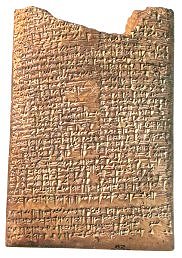
Aside from the agenda to make evolution compatible with the Bible, there is another reason some Christians don’t take the Creation account literally. This is because of the apparently striking parallels to other creation myths of the time, which also have, for example, man created out of the ground by the gods. In some people’s view, this is more than just coincidence, and not having had enough exposure to those texts, I can’t really say. But they believe that Moses simply wrote in a fashion that the Israelites were already familiar with, rather than trying to record actual events. However, it’s been known for a long time that almost all cultures have a flood story. Yet far from being a problem for the Biblical story of Noah’s flood, it has served to bolster the argument that the flood literally took place. We understand that all of these stories exist because the truth of the flood has been passed down verbally from Noah to successive generations. They vary as people have altered the story, but Bible believing Christians know that the Biblical account is the truth. Likewise, I don’t think that what Moses wrote was necessarily the first time God had revealed these things about Creation to Mankind. Adam himself knew that he had been created from the dust of the ground, as he was told by God “By the sweat of your face you shall eat bread, till you return to the ground, for out of it you were taken; for you are dust, and to dust you shall return.” (Genesis 2:19). And so the story of how Man was created from the dust would have been passed down even to those cultures that existed at the time of Moses. We see references to the creation account in Job also, such as the creation of man from dust (Job 10:8-9), and Job lived around the time of Abraham, long before Moses wrote.

Now there are a lot more “what about this’es” and “what about that’s” which we could discuss, but as I’ve heard one preacher say, “If you believe Genesis 1:1, you shouldn’t have any problem with the rest of Scripture!”


By faith we understand that the universe was created by the word of God, so that what is seen was not made out of things that are visible. (Hebrews 11:3)

Saturday, October 8, 2011

Gay Activism on Facebook

In these modern times, changing the way our whole culture looks at the world is no longer a matter of holding public protests or managing to print articles in prominent magazines. Rather, people are able to use social networking sites to present images and slogans like the ones I've posted here. These are just a few of the ones I've seen posted by friends on Facebook. And seeing the emotionally charged attitudes of those friends, I know that these images are effective in their goal of changing the minds of a nation. Yet their arguments are flawed from a Biblical perspective. So I thought I'd make some comments on these images...


Not wanting to reiterate things I've said about homosexuality in the past, but I must make one thing clear; Christians ought not to hate homosexuals, and I for one certainly don't. A Christian, in one sense, might say "Amen!" to this first image. I agree with the point this image is trying to make about Homophobia. The poster alludes to the common Christian response to homosexuality, that it is "unnatural". But when a Christian uses the term "unnatural", in particular, it can mean unnatural in the sense of what God never intended. In that sense, sin and death itself are unnatural - God never intended for Man to die, but we do as a result of our "unnatural" sinfulness. Again, sin is unnatural (though everybody sins) in the sense that it is not the way God intends for us to behave. However, the image then implies that Homosexuality is, on the contrary, natural. And from a Biblical perspective it is not, in that same sense of being something God never intended for Man. God's intent for Man is clear...

Therefore a man shall leave his father and his mother and hold fast to his wife, and they shall become one flesh. (Genesis 2:24)

Homosexuality is unnatural because God designed our bodies, and it is "natural" for something designed for a purpose to fulfill its purpose. The argument lends support to the idea that homosexuality is natural by claiming that it is found in "over 450 species". Let's assume that claim is true; it makes no difference Biblically, because all of Creation has been corrupted. I've just told you that death is unnatural, Biblically speaking, and it is certain that animals die!

Despite the great number of these sorts of images, they do all tend to be arguing one of only a few key points. Again, this sign is essentially saying that homosexuality is natural. This gentleman appears to be saying that he never chose to be gay, but has been gay since birth. Many Christians have a problem with the idea that one might be genetically predisposed to homosexuality, and I've been involved in that debate amongst my peers. I, personally, don't have a problem with the notion of a "gay gene". There are many unnatural things that are genetic as a result of the corruption of all Creation. We could point to Down's Syndrome, for example. Now, the Bible doesn't condemn having Down's Syndrome, so we might say it's not the same thing, but it's at least an example of an "unnatural" genetic defect. If we wanted a better example, we might talk of the genetic predisposition to alcoholism or violence, which are things the Bible would also condemn. The genetic bias for these things is as debatable as the one for homosexuality, I believe. But it certainly seems to me that a genetic bias seems plausible, even if we base it purely on anecdotal evidence like the image above. It makes no difference - I am certain that I myself have a strong genetic disposition toward adultery, incest, rape, and all manner of sexual acts which are also prohibited in the Bible. It is no excuse if I do those things.

Now the cartoon on the right, and likewise the cartoon below, both say something similar; that society has seen similar prejudices before, and as silly as those prejudices seem to us now, so should any prejudice against homosexuality seem silly to us. However, these images don't draw valid analogies to homosexuality. The first, to do with being left handed, fails because the Bible never condemns left-handedness. Some will disagree with that statement, so I should discuss briefly... The Bible does often speak about the right hand as being significant; Jesus is said to have ascended to Heaven and is now sitting at the Father's right hand (Hebrews 1:3). It is a cultural symbol for a place of honour. It is where the king's most honoured would sit. This doesn't make left handedness evil or inferior. The closest we get to the Bible having something negative to say about left handedness is in Judges 20:16 where the literal translation of "left handed" would be those "impeded in the right hand". But this doesn't condemn left handedness, this is simply a way of referring to left handedness in a world which (still) is predominantly right handed. The verse itself tells us that these left handers were extremely skillful in wielding their slingshots, and so doesn't even imply that being left handed is some kind of disability. Those in the middle ages who called left handedness demonic and such were simply wrong. But the Bible does clearly refer to homosexuality as a violation of God's Law.

The second cartoon is similar to the one above, saying that we once saw interracial marriage as unnatural, but now we don't. However, once again the Bible doesn't condemn interracial marriage. I have to make a point of this because on the surface it does seem to, where the Mosaic Law would prohibit Jews from marrying Gentiles. This distinction however was religious, not racial. If a Gentile would convert to Judaism, (as did Ruth in the Book of Ruth, for example) then there was no infringement of the Law. Even the New Testament maintains that so close a union as marriage should not be made between believers and unbelievers.

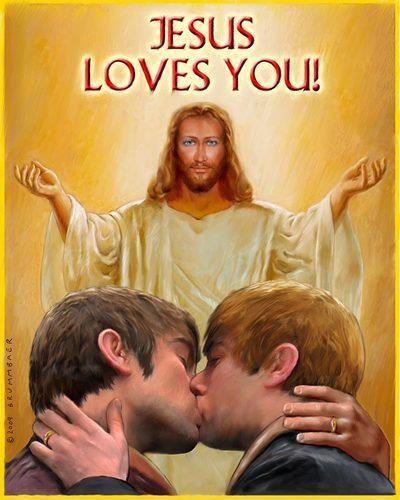
Now in standing by the claim that homosexuality is not natural according to God's intended order of Creation, many homosexuals will feel this to be an attack on them. The saying "love the sinner, not the sin" is not often seen as sincere; surely if we hate the actions of a person we necessarily hate the person, right? But that's not so... Another image I've seen is of two men kissing, and behind them an image of Jesus with the caption "Jesus Loves You". The fallacy in that image is that while Jesus does love the people, it is precisely because of that love for them that He commands us through the Scriptures to repent of homosexual behaviour. From one who truly believes that refusal to repent from sin such as homosexuality will lead to eternal judgment, it would be nothing short of hate if I didn't try to correct some of these false notions and direct people to the truth of the matter.


I know that a gay man's feelings for another man can be romantic and loving, and that a true sense of companionship can be found between gay men (or women). But I believe that the good things of God are seen throughout all humanity, though we are all corrupt. Religions other than Christianity, for example, all contain much truth; almost all religions teach some form of the Golden Rule for example. But other religions are in error when it comes to the whole truth about God. We are all created in God's image, and so the good things of God can be found in all of man's pursuits. But homosexuality is a corruption of the good things of God; namely love and sexuality. It's a partial truth. Just as I might find beautiful love and companionship in a polygamous marriage, it would nevertheless be a sinful corruption of God's true intent for marriage. If, however, we live according to God's intended order, we discover true fulfillment because we live and behave as God has designed us to. Does this mean a gay man forcing himself to marry a woman will find "true fulfillment"? No! But a gay man who comes to Christ, and through Christ deals with his homosexuality, may then go on to naturally desire the things of God. That may be marriage or singleness, but a true Christian will naturally align themselves to God's revealed will. And that takes a supernatural change to the heart of any man.


You make known to me the path of life;
in your presence there is fullness of joy;
at your right hand are pleasures forevermore.

Psalms 16:11

Sunday, October 2, 2011

Should Circumcision Be Illegal?

I read an article recently that a certain state in the US was almost successful in making circumcision illegal. This is certainly a great concern to the Jewish community! But my own wife is quite a passionate advocate for the banning of circumcision. She considers it to be cruel, and would even go so far as to call it child abuse. But how should I, as a Christian, feel about this issue of circumcision?

When my wife was pregnant with my son, I had been a Christian for less than one year. But my wife was not saved. And at that time I was studying theology under a certain Bible teacher who had once explained that "circumcision is healthy, since a foreskin is able to trap dirt and germs..." and that studies had shown there to be less cases of cervical cancer in countries where circumcision was more commonly practiced. So I, as a new Christian, ate this up. "Oh, the wisdom of God..." (you see), "in giving circumcision to the Jews!" And so I told my wife that I wanted our son to be circumcised, believing myself to be wise as God was wise in giving the Jews circumcision for health reasons. But my wife believed back then, as she does now, that circumcision is cruel and ought to be illegal.

So this was a point of contention between us. I wanted to "be wise", but my wife didn't want to "abuse our child." Finally the day came when my wife went into labour, and we were still unresolved on this matter. My son was born after a 7 hour labour, and they handed him to me to hold. It was while I was holding him that the midwife asked about whether we were going to have him circumcised. My wife told her that she didn't but that I did. And the midwife asked "is that for religious reasons?" "No, no!" I said emphatically, for that would be thoroughly anti-Christian. So I explained it was for health reasons, based on what I'd heard, and for no other reason than that. Then the midwife said that we should discuss it and when we'd come to a decision to let her know. But I looked at my wife, and then I looked at my son, and I think that perhaps God gave me some true wisdom at that moment. Looking at my wife, I thought "Though I've said it is for health reasons, I'm sure she will forever suspect that my real motive was religious... and surely for her sake I should give up my own preference in order to send the right message, for there is no commandment from God that a Christian must circumcise their children." And looking at my son I thought to myself... "I have here in my arms a Gentile child. Since the time of Abraham there have always been Gentiles!" (They seems to have survived fairly well despite having foreskins!) "No, this is a Gentile child, and he should forever be seen as a Gentile child; for the salvation of God has been sent to the Gentiles!" So before the midwife even left the room, I looked up and said, "It's fine... I don't want him circumcised." (And you should have seen my wife's reaction to that!) I had been so adamant about this for months "because it's the wisdom of God", and just like that I saw my own foolishness. It was also my first lesson in questioning what preachers say from the pulpit!

I later discovered that these studies which supposedly show circumcision to be healthy are truly flawed. But one thing which was sort of a landmark moment for me was when my wife showed me a YouTube video of an actual circumcision. I might be able to find the link on request, but it really was horrific! If circumcision is optional for Christians then there is no reason at all to choose the circumcision option! But does this mean we should ban it? By no means... (and I still disagree with my wife on this point). Just as I relented from circumcising my son because it is evident that Gentiles have survived with their foreskins for so many thousands of years, it is also evident that the Jews have survived for thousands of years. Yet my wife has dug up arguments to show that circumcision is a high-risk operation. While I'm somewhat sympathetic to my wife's view on circumcision, in so far as I would say there's no good reason to circumcise your children, I don't necessarily agree with all of the arguments she would make... She also argues, for example, that it reduces sexual pleasure for men. I doubt it! But most importantly, circumcision is important to the Jews, and what would banning it mean to them? Paul had Timothy circumcised for the sake of the Jews they were witnessing to, even though there was no religious requirement for Timothy to be circumcised. Just as I relented from having my son circumcised for the sake of my wife that I was witnessing to, we should permit the Jews to practice circumcision lest they blame a "Christian people" for taking away that right, and we close off opportunities to witness to them. It's true that circumcision is brutal, but I think that's part of the whole point of circumcision! Biblically, circumcision symbolizes the separation of our sinful nature through adherence to the Law. But separating our sinful nature from us isn't easy when we try to do it "through the Law"; it's very difficult and very painful! This symbolism works, and as Christians we should understand and be thankful to God that through the cross it's not this horrible ordeal!

But what I'm talking about here doesn't apply only to circumcision. I wrote recently about how the Muslims have (allegedly) petitioned for Christmas celebrations to cease at my children's school. As I've been discussing this with people, the response I typically get is something like "Well we should demand that they can't celebrate Ramadan!" But look, why would we cause them to despise us!? They want talk of Jesus Christ at Christmas silenced so their children aren't exposed to Christian ideas; but how much better is it when a Christian can say, "From childhood I've listened to you teach me about Islam, (or Evolution, or New Age, to broaden this scope even further), and yet I firmly believe in Christ." Now we should fight to have Christianity in schools, but let's not fight to have other world views banned. As Paul taught us by his example, we must be "all things to all people"...


To those outside the law I became as one outside the law (not being outside the law of God but under the law of Christ) that I might win those outside the law. To the weak I became weak, that I might win the weak. I have become all things to all people, that by all means I might save some. I do it all for the sake of the gospel, that I may share with them in its blessings. (1 Corinthians 9:21-23)

Thursday, September 29, 2011

And There Was No More Christmas


I seem to continually be receiving emails from friends about the “Islamization of the world”. Some are from concerned Christians, others are from concerned non-Christians, and others are from non-Christians who think that because I'm a Christian I should be concerned. And what sort of things do these emails say? They say that there is somewhat of a conspiracy that the Muslim religion intends to become the predominant religion in the world by settling in countries and major cities which are not predominately Muslim at the present time. And then, as they become a sizable majority, they will slowly gain more and more influence to thoroughly impose Islam upon that country. I’m always wary of how much truth there is to these sorts of emails, but recently my wife started work for the local school where my children attend, and she has told me that the school announced privately to staff that there probably won’t be any Christmas celebrations whatsoever this year. Furthermore the reason for this, so the story goes, is that we mustn’t offend the Muslim community by celebrating an overtly Christian occasion. So there certainly seems to be some truth to all this talk of “Islamization”, though I would also concede that it’s due to all this Islamization hype that the Muslim community are blamed for this when the truth may be otherwise. I don’t think there’s any big conspiracy; I’m fairly convinced that the Principal of that school is an Atheist and her agenda isn’t to keep Muslim’s happy but to take advantage of any excuse that takes religion out of the school’s culture.

I must admit that I’m not really in my comfort zone speaking on this... though I keep getting fed these emails, I’m not one to necessarily trust such sources. It is, however, plainly evident by looking at the world around us these days that Islam is on the rise. I am happier to call it “Islamic Revival” than “Islamization”, much like we would speak of a Christian Revival. From my perspective, the Church has been compromising itself for a long time now... many Churches are not right these days; failing to acknowledge the authority of Scripture, ordaining homosexuals, denying that Christ is the only way of salvation, and many other errors. And it is precisely the Biblical pattern that God would allow another religion like Islam to rise up, and to subject His Church even to persecution, just as God gave Israel over to their enemies as judgement for their faithlessness. Consider what it would do for the Church if it were persecuted, (not that we actually wish that upon ourselves)... To use a Biblical idiom, it would be “refined by fire”. Anyone not truly committed to Christ would soon abandon the Church. And even the banning of Christmas at my children’s school is a kind of persecution, but what effect will it have on local Churches? Will they care?

We should look at the rise of Islam from this perspective... the Church has struggled somewhat to go and preach the gospel to Muslims in their own lands, so God is bringing them to us. We should see their presence in our neighbourhoods as opportunities to reach them with the gospel. But what I see instead is fear and hatred towards them because of these emails that circulate. I’m not going to pretend that Christmas celebrations being cancelled at my children’s school isn’t a sad thing, but to react with hatred would be the opposite of Christian. How can we hate those who are without Christ? It should stir up our compassion. People say "Look at what he Devil is doing through Islam", but I would want to say look at what the Devil is doing through these emails that circulate, using them to provoke Christians to hatred. Let’s not forget who we are, and what our Lord taught us. Let’s examine ourselves and repent of any hatred we have toward the Muslim community.


and he had compassion on them, because they were like sheep without a shepherd. Mark 6:34

Monday, August 29, 2011

From Whence Cometh Evil?

It has been said that the Problem of Evil is the biggest problem for Christianity, and I think that statement is something a majority of people tend to agree with. In fact, one schools-based ministry said that this was the number one question asked by high school students. So it's certainly worthwhile spending a disproportionate amount of time discussing it. I've certainly written on it before, but let's try to put it all together and maybe dig a little deeper into it.

To begin with, I think we need to recognize at least two different kinds of evil. There is “human sin”, or deliberate acts of evil on our part, and there is suffering as a result of natural causes; from disease to natural disasters to just plain growing old. This is "natural evil." God is responsible for both kinds of evil; but how can God be responsible for evil at all if He is supposedly "all good"?

Now, to be responsible for evil does not make God evil if He has a sufficiently good reason for allowing evil. So we must conclude that God does have a good reason for allowing the various evils in the world. Other options exist, but I don't think they work... we cannot, for example, say that God is not, in fact, responsible for the evil in the world, because being all powerful He is surely able to both stop all evil in an instant, but also to prevent evil occurring in the first place. So I think that God, who is also wiser than us all, must have a good reason for the evil in the world. The question is, what is His reason? Does a satisfactory reason even exist?

In a sense we really don't know God's reasons for allowing evil, especially when it comes to specific cases of evil. But I do think the Bible gives us information as to why God allows evil generally. And with regard to the two kinds of evil, I think God has different reasons for each. So let's deal with human sin, firstly. Why did God allow Adam and Eve to disobey Him in the first place, thus consigning all of mankind to hell? Here, I have already put forward what I consider to be my strongest case, when I wrote #34: If God is good, why did He create anything evil in the first place? So I'll repeat the key point here. I think that God created a world with sin so that He might demonstrate His love for us in sacrificing Himself as an atonement for our sins. This is God's “good reason” for allowing human sin. “God shows his love for us in that while we were still sinners, Christ died for us.” (Romans 5:8). And “By this we know love, that he laid down his life for us...” (1 John 3:16). In other words, God wanted to show just how deep His love is by sacrificing Himself for us, even though we are sinners. If we were not sinners saved by His grace, what little would we know of His grace and love?

Now, we would want to try to “compare equations” here. In a world without sin we have no need for the atonement, which means we have a lesser understanding of the depths of God’s love, though we would at least have partial knowledge. We also have no people at all going to hell. So we ask ourselves, is it all worth it? After all, Christ needn’t have suffered in that scenario, either; so it’s better for Him too! But trying to pin relative values on each of these things is a human exercise, subject to a human perspective. We can trust that God did consider the atonement; the revelation of His love and character, “worth it all.” And I certainly think that we won’t fully appreciate God’s plan of redemption this side of death.

But let’s move on to “natural evil”. Why the earthquakes, and why the floods, and why even old age and death? These things are a result, or judgement, of human sin, so the Bible declares. They are indiscriminate because we are all sinners alike. And like any punishment, it ought to have the effect of making us regret our sins. In just about every culture and religion this is recognized; that whenever there is a natural disaster, it is said... “The gods must be angry!” In fact, the motivation for worship in most pagan religions was to satisfy the gods lest they be angry and bring droughts or some such natural disaster. I think that this is an idea that God has “programmed” into our minds. In Christianity, as we read the Old Testament, God told Israel that their disobedience would lead to poor crops and various other “natural evils”. Knowing this, what was their reaction supposed to be? Obedience. And when these things came upon them, what was their reaction supposed to be? Repentance.

Probably the best example of this is the story of Pharaoh when the ten plagues came upon Egypt, at the hand of Moses. As you read that story, you’re just dumbfounded! How after each plague, Pharaoh still won’t obey God and let Israel go free. You just can’t believe how anyone could be so defiant. If Pharaoh had let the people go after the first plague there would have been no further damage. But God even hardened Pharaoh’s heart, for this reason... that “The Egyptians shall know that I am the LORD, when I stretch out my hand against Egypt and bring out the people of Israel from among them.” (Exodus 7:5). That is “Egyptians” (plural). God prolonged the demonstration of His power so that all of Egypt might recognize Him as God, and perhaps they might forsake their own gods and turn to Yahweh. And not for Egypt only, but word of these events reached the whole of Canaan, as we see later on. Any who did not turn to God would have been as stubborn and defiant as Pharaoh.

Now, those plagues were miraculous in nature, so we might argue that it’s not the same thing when we’re unrepentant in the face of natural disasters. I’m not saying, however, that we can necessarily be saved apart from Biblical revelation. Pharaoh essentially had, or was part of, Biblical revelation. And when Israel experienced natural disasters, they had the Word of God which explained to them what was happening, though there was nothing necessarily miraculous about their droughts and so forth. It is sufficient, however, that natural disasters and even death itself, does at least suggest there is a God who judges; just as those pagan cultures, without knowledge of the Bible, associated disasters with the “anger of the gods”. In recognizing there is a God, it is then up to each individual to seek knowledge of Him, and mercy from Him. Of course, an atheist might say that they simply don’t see evidence for God in natural disasters. Yet to call one’s self an atheist presupposes some notion of God. And to discuss the Problem of Evil in the first place presupposes an understanding that there is a God who is responsible for natural evil. It doesn’t make a difference whether this knowledge was innate or learned; God’s purpose is accomplished in anyone who understands this so-called “Problem of Evil” at all.

But we also want to ask ourselves; isn’t there a better way to get people to turn from their sins and to turn to God? Are natural disasters and death at all effective in doing this? Well, if you’re looking for a more gentle approach from God towards mankind, then you have it... it’s the Bible. God has given us His Word, freely available to us these days on the Internet, but always quite accessible to many. It’s there for you to read and give your full attention, or for you to completely ignore. But I suppose that, due to the same hardness of heart that caused Pharaoh to ignore the continual evidences of God’s wrath and power, we are more inclined to ignore the “gentle approach” as well. But death of loved ones, and especially when our own death is nigh, most definitely causes a person to think seriously about the reality of God.

In these short paragraphs, we have barely explored this issue, really. Just consider, as well, that when Christians find opportunity to care for the victims of natural disasters, or even the elderly amongst us, God’s love is made known. This is just a hint of at least one more reason why God’s ways are wiser than we imagine. We may not know the reasons why God allows evil in this world, but I don’t think we have to. I think it suffices to know that He has a reason, and to believe that He is trustworthy. Some will say that God owes us a reason, but I don’t think that’s true. It’s not like we’re equals with God. But I don’t think we could even know God’s reasons, because I think it would take the mental capacity to see all of space and time before us, all at once. To see the true nature of every man’s heart, and to see every consequence of every action and to see and understand the very nature of God fully... I think that’s just the beginning of what it would take to understand God’s good reasons for allowing evil. And I think that this is a topic that could fill many books, but that this is precisely part of the whole “big picture” - that in contemplating the “why’s” of theology, we see more and more of God’s wisdom and power and glory.

Moreover, I saw under the sun that in the place of justice, even there was wickedness, and in the place of righteousness, even there was wickedness. I said in my heart, God will judge the righteous and the wicked, for there is a time for every matter and for every work. (Ecclesiastes 3:16-17)

Wednesday, August 24, 2011

The Blessings of God

Life has been good for me this past couple of years. We own an investment property we're renting out, which we bought with money we inherited from a rich aunt. In the midst of global financial struggles, the company I work for is doing really well. We really don't lack anything. But recently we decided to redevelop that rental property, and in the last two weeks the tenant has moved out and the building has been demolished. So we're now without rental income, and we're about to start forking out to builders and so forth. We expected it to be a time of financial struggle for this family. But a few days ago the kindergarten my son attends asked my wife if she'd like to do some work there. She did her first day today and it sounds like there will be somewhat regular demand for her; they were most impressed with her skills and experience (she worked in child care for nearly ten years.) So I want to thank God, first of all, for taking care of this family.

This blog is intended to show you the world through a Christian's eyes, and in recognizing the way in which God has blessed us today, and thanking Him for it, I'm hopefully doing just that. But what of this "prosperity gospel" that some speak about? It's the idea that being a Christian should mean that you will always have everything going for you. In the extreme sense, it says that God will see to it that you won't ever struggle financially, you won't ever get sick, and so on and so forth. And if you do, it's for lack of faith on your part. But this is not the right way to see the world, Biblically.

Today I am thankful to God, and this work that has been offered to my wife is a wonderful surprise for us. But our expectation, as I said before, was that we would be facing a financial struggle. Of course, it was never going to be all that bad, relatively speaking. We're not living in a third world country, or even on the poor end of the spectrum in our own city. The worst it will ever get for us will probably still appear ludicrously wealthy to many people in this world. Why are we so fortunate? Is it because of our faith? No; many of our non-Christian neighbours are more wealthy than we are. God has blessed them just the same. But do they recognize that and give thanks for what God has given them? That would be an exercise of faith. So it's not your faith that brings wealth, but faith exists independently of wealth. We exercise faith when we acknowledge the blessings of God, and are content no matter what situation we're in.

So when things aren't going well, how do we explain it? It's not a lack of faith on our part. Is it that God is mad at us for having done something wrong, perhaps? No, in many ways it can be a privilege to suffer, because the excise of faith through suffering is an amazing witness to the world; and bearing witness of Christ is every Christian's joy. For people to say "Look, despite all they've been through they're still as faithful to God as they ever were!", is a powerful testimony. As one man said, after his wife had been through chemotherapy for cancer, what strengthened him was the realization just how much of a privilege the ordeal was, as though God were saying "I'd put this burden on someone else, but not many could handle it like you can!" He was all the more determined to conspicuously show the world his steadfastness in faith as he and his wife were going through this trial.

The attitude of Christianity is not "always look on the bright side of life", as though whatever situation you're in is a blessing if you could only see it that way. Suffering cancer, or going through the ordeal of your husband or wife going through cancer, is not a blessing. There may be blessings incidental to it, but the suffering is not a blessing. We wait for a world in which there is no suffering. But as it is now, suffering is a fact of life. And as I have said, faith is independent of your situation. We exercise faith toward God in all situations; for richer or poorer, in sickness and in health, till in the resurrection we are united.

"Not that I am speaking of being in need, for I have learned in whatever situation I am to be content. I know how to be brought low, and I know how to abound. In any and every circumstance, I have learned the secret of facing plenty and hunger, abundance and need. I can do all things through him who strengthens me." (Philippians 4:11-13)

Sunday, August 7, 2011

God Don't Make No Junk

I recently saw a documentary about our DNA, and I heard something that I'd like to comment on. And this blog has always been "one Christian's view of the world"; I'm just an average person, only somewhat educated in Biology, who is evaluating and reacting to the everyday things that average people are exposed to. So I'm not claiming to have thoroughly researched this in technical scientific journals and such. This is just my reaction to what I heard on this particular BBC documentary, simply called "The Gene Code".

When Darwin developed the theory of Evolution, he reasoned along the lines that some species of animal have features in common with other species of animal. This is how we get the idea that man descended from apes. Apes have very similar bodies, it would appear, to human beings. This is what really drives the whole theory. So what happened when DNA was discovered? From a Christian perspective, I think it does serious damage to the theory of Evolution. It's nothing short of a miracle that all of our features are governed by this one "device", which is quite literally a language common to all life. However, Evolutionists stick to their guns and see DNA as responsible for all this evolution. When I have discussed evolution with other lay-people in the past, they have often explained to me that the similarity we find between species, such as humans and apes, correlates to the similarity between those species' DNA. But what I learnt on this documentary was that this isn't always the case.

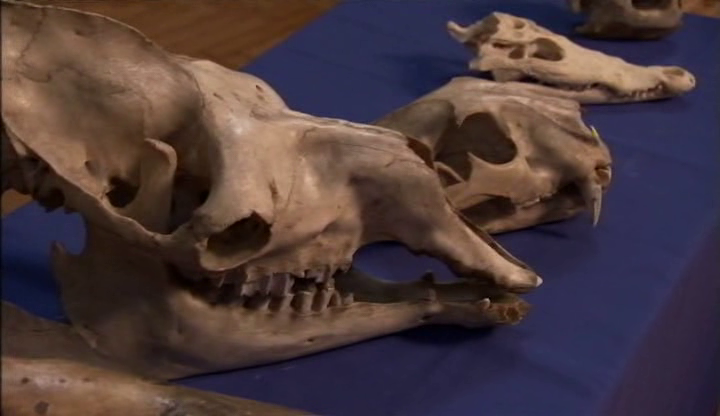
There is a scene in the documentary in which the host is shown an array of quite diverse skulls. They had a number of them including a whale's skull, a hippo's, a crocodile's, a camel's, a tiny little bat's skull, and of course a human skull. Now according to Darwin's reasoning, animals which appear to have more in common ought to be more closely related. But it turns out, according to this documentary, that in terms of DNA the hippo was considered more closely related to the whale than to the camel! This was the example they used, and they acknowledged how completely unexpected this was. They were blind to the problem this poses for Evolution, but this evidence would be so unexpected to Darwin, I wonder whether he wouldn't have said, "Well, that just proves me plain wrong!"

What I learned was that all of those skulls were all constructed in the very same way. Apparently DNA works like this... All of those animals might have the exact same genes. Each would have the gene for a nose, for example. What makes the difference is the duration of time that gene is active during the development of the particular animal. While the nose gene is active, the nose is being "generated". The nose gene would be active for a short time in human beings, giving us a short nose, but for a longer time in a camel, giving it a long nose. To me, this suggests that every animal on the planet could have the exact same genome, and yet still look as diverse as they do; because it's not what genes you have, it's in this orchestration of when each gene "switches on and off".

But who or what is performing this orchestration? Is it God Himself? In a sense, I would say that it is. And that's based on the Bible, in a passage such as Psalm 139:13 which reads "For you formed my inward parts; you knitted me together in my mother's womb." In what specific ways God is involved, I don't know, but it may simply be that He designed the DNA structure, and fore-ordained the DNA I would inherit. But the documentary goes on to talk about something which scientists call "Junk DNA". This is DNA which doesn't seem to have any purpose. Now, I recall a conversation I had once with an atheist chap. I asked him "Surely, according to Evolution, the living world should be full of features which have no real purpose, since some parts of us should be random mutations and such which haven't actually formed anything useful "yet". Why does everything have a function or a purpose?" Well, he suggested I consider nipples on a man... But, no, I think my point is still an important one. I think that even nipples on a man have a purpose - in relation to temperature control, I've heard. Often we may not have come to know or understand the purpose of something, but I believe that all physical features have a purpose. Even if we grant what must be at least 99.9% of features which are known to have a purpose, this is highly suggestive of a Designer-God. So I was not convinced that some 80% of our DNA is useless "junk". And the host of this documentary acknowledges this, agreeing with my opinion that we simply haven't discovered its purpose yet. And part of its purpose, he suggests, could be in this orchestration of when genes are switched on and off.

Yet another conversation I had with an atheist comes to mind. He argued, (parroting Dawkins), that theism hinders science because theists are content to simply say "God did it!" Of course, this isn't really true at all; there are few genuine examples of a Christian scientist resigning to the idea that "this is a mystery of God which we will never know." But on the other hand, the Evolutionist clearly expects (and should expect, if they are to be consistent with their world view) that some things simply have no function or purpose at all, and so write them off as "junk", ceasing further investigation. This is certainly a world view which hinders science. Of course, Evolutionists aren't consistent with their world view, which is why the host of this documentary was able to say that scientists now suspect that Junk DNA isn't junk after all. But this inconsistency demonstrates how they are essentially dishonest with themselves, accepting a world view which contradicts reality.

But none says, ‘Where is God my Maker, who gives songs in the night, who teaches us more than the beasts of the earth and makes us wiser than the birds of the heavens?’ (Job 35:10-11)